




THE ANCIENT HEART OF MUNGO
Words and pics Glenn Marshall
For more than 45,000 years, Aboriginal people lived around the shores of the Willandra Lakes. Discoveries at Mungo reshaped our understanding of human habitation outside Africa, making this one of the world’s oldest known sites of modern human life and a place you can still walk today.
Tucked in the north-western corner of Victoria, Mildura is a popular tourist destination that offers something for everyone, whether you’re planning a week-long visit or just an overnight stay. But what if I told you there’s a sidetrack nearby that leads to a unique destination where you can literally travel through the sands of time? That destination is Mungo National Park.
Having crossed the mighty Murray River into Buronga, NSW, at the roundabout, take the Silver City Highway exit towards Wentworth. A short drive from here is the signposted turnoff to Mungo National Park. The road is bitumen except for the last 40km, and towing a caravan shouldn’t be an issue. Please check the weather before you set off, as wet weather can quickly lead to road closures and limit access to sections of the park. Additionally, be sure to pack extra food, water and fuel, as these amenities are not available within the park.

Staying at Mungo
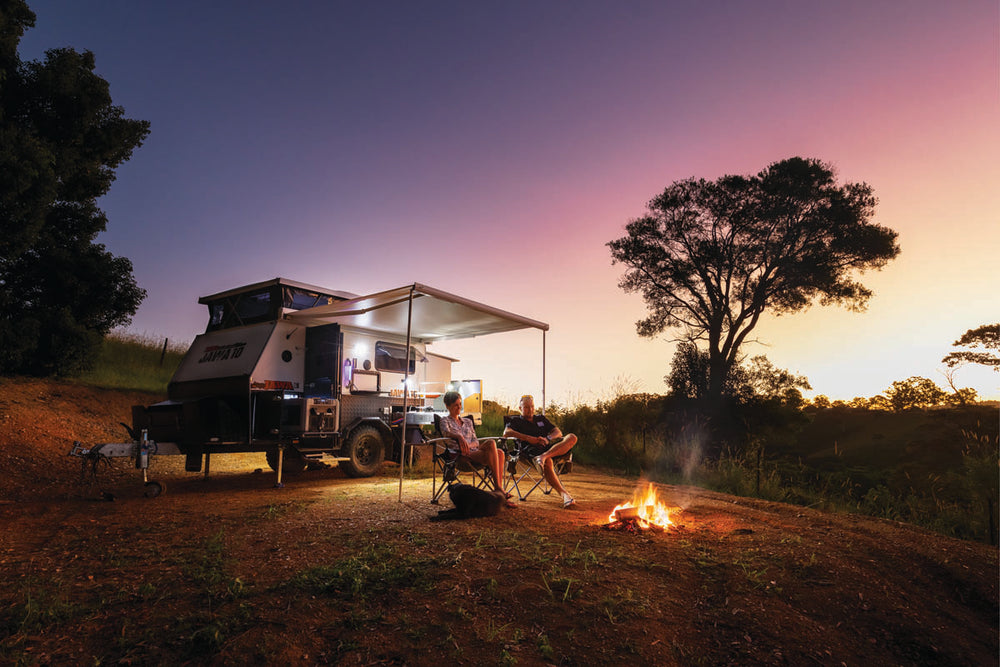
The Main Campground is the hub of Mungo National Park and where you’ll find dispersed sites in varying sizes, with some able to handle big rigs. Bookings are a must, but it would be nice if National Parks NSW showed images of the sites so you could select one that best suits your setup. The campsite also has composting toilets, picnic tables, fire pits and gas barbecues ($1 per 20 minutes).
The campground provides a peaceful bush setting and makes an ideal base to explore the park over a couple of days. On a clear night, there’s nothing better than sitting in front of a fire and looking up at a million stars. Please book your campsite online before travelling to Mungo. You can pay the per-vehicle, per-day park pass at Mungo Visitor Centre with cash or credit card if you don’t already have a NPWS annual pass.
Mungo Visitor Centre is a hive of information, with a collection of storyboards that highlight the history of Mungo National Park, from evidence of human activity dating back 40,000 years to the pastoral days from the 1850s to the present. Learn about the discoveries of the burned bones of the Mungo Woman in 1968 and the almost complete skeleton of the Mungo Man in 1974. The visitor centre also has flushing toilets, hot showers and a unisex ambulant toilet.
Another conveniently close accommodation option is Mungo Shearers’ Quarters, which offers five bedrooms, toilets, showers, drinking water, a barbecue, electricity and an amenities block. All you need to bring is bed sheets, blankets, pillows, towels and food supplies. I have stayed here in the past, and if you left the caravan back at Mildura, it is a good option if you want to spend more than a day exploring Mungo while also enjoying a few extra comforts.

Whether you're camping under the stars or setting up for a few days, a few quality camping essentials can make all the difference. A CGEAR Multimat helps keep dust, sand and dirt outside your campsite by allowing debris to fall through the mat rather than collecting on the surface. Pair it with a Muk Mat at the entrance to your caravan, camper or tent to stop dirt being tracked indoors, and use Tiegear pegs, guy ropes and anchoring gear to keep your shelter securely fastened in changing weather conditions. Together, these simple additions help create a cleaner, safer and more comfortable camp, leaving you free to enjoy the unique beauty of Mungo National Park.
The cultural heart of Mungo
A highlight of any visit is the Walls of China, where crescent-shaped dunes, or lunettes, have been formed by wind erosion, exposing layers of ancient sediment and revealing evidence of human occupation dating back more than 40,000 years. Access to the lunettes area is restricted, with visitors required to remain on designated boardwalks and viewing areas. Walking directly on the fragile lunettes or lakebed is prohibited to help preserve both the landscape and its archaeological significance.
To gain a deeper understanding of the park, I can highly recommend joining a guided tour operated by experienced local Aboriginal guides. The tour provides an insight into the cultural history of the Paakantji, Mutthi Mutthi and Ngiyampaa peoples, whose connection to this landscape stretches back tens of thousands of years. Listening to the stories while standing in such an ancient environment adds another dimension to the experience.
I learned how Aboriginal people came to be at the Willandra Lakes region, what they ate, where they lived and how they were buried. The guide showed ancient shell middens, old carving stones and places where fires had been lit. It’s just amazing to get so close to such an ancient place. You’ll hear how lunette erosion exposed the Mungo Woman’s remains: “They cremated her, crushed her bones, burned her again, then covered her remains in the sand,” the guide explained.
The Mungo Man was buried on his back with his hands crossed upon his lap before being sprinkled with red ochre. This is the oldest known example of such a burial ritual.
“Mungo Man was about 50 years old when he died,” said the guide, “he was a hunter who suffered bad arthritis in his elbow from throwing spears.”

Exploring the driving loop
Another great way to experience Mungo is on the Mungo Self-Guided Drive Tour. Beginning at the visitor centre, the 70km track is a one-way loop suitable for 2WD vehicles. It may be closed during or after wet weather, so always check in advance.
I suggest beginning your driving tour by visiting the historic Mungo Woolshed and sheep yards; you’ll be astounded by the craftsmanship that went into their construction. Its unique drop-log construction, dating to 1869, used the hardy cypress pine, a termite-resistant wood. In 1922, part of the woolshed was removed and relocated to build the Zanci Woolshed.
Following the trail, you cross the dry bed of Lake Mungo before turning to track along the edge of the lake, reaching Red Top lookout as the track climbs the lunette. A short boardwalk offers views along the lunette with deep ravines eroded by the prevailing winds.
The track then takes you onto the plains, lined with saltbush, bluebush, rosewood and belah trees, and a mob of kangaroos was enjoying the shade of the sugarwood trees as I drove by.
Entering the Mallee dunes area, porcupine grass replaces the saltbush, and I found the perfect coffee stop at the aptly-named Mallee Stop. There is a 500m loop walking track to explore, and the information sign suggests keeping an eye out for lizards.
A good lunch spot is at Belah campground, the second camping area in Mungo National Park. Take advantage of the picnic tables under the shade of a mallee gum. Fires are not allowed at this remote campsite, which is suitable only for tent camping.
Vigars Well Picnic Area is a highlight of the drive. It’s not so much the well, but the massive dunes that dominate the area. Climbing to the top of the largest dune, I was able to watch a free-burning bushfire out to the west. I would have loved to have had a board to sit on to slide down the dune like a kid.
After recrossing the lunettes, the drive takes you across Lake Mungo towards the western edge, the dry lake floor covered with bluebush and other native grasses. The sheep that once grazed this lake devoured this fodder to the detriment of the land.
Upon reaching the red dunes on the western bank, you’ll be able to spot cypress pines beginning to regenerate, their population having been devastated due to their strength and suitability for building. Continuing along the track, you’ll soon reach the old Zanci Homestead.
Mungo was once part of the vast Gol Gol Station before being divided in 1922 into smaller holdings under the Soldier Settlement Scheme, creating properties including Mungo and Zanci. Today, the Zanci Homestead site provides a fascinating glimpse into the hardships faced by early pastoral families. The original drop-log woolshed, stables and underground dugout remain, highlighting both the ingenuity and resilience required to survive in this harsh environment. Informative displays trace the area’s pastoral history from the 1850s through to the creation of Mungo National Park in 1979.

More than a sidetrack
There are several short walking trails throughout the park, including paths around the visitor centre and the popular Mungo Foreshore Walk. There is also access to the Grasslands Nature trail and Mungo Lookout from the main campground. Most are easy and suitable for all fitness levels, but conditions can be harsh during warmer months, so carry water and avoid walking during the heat of the day.
Mungo National Park may only be a sidetrack from Mildura, but it feels like stepping into another world entirely. If you’re seeking a mix of outback touring, cultural history and unforgettable scenery, this ancient landscape is well worth the detour. As the sun set on another remarkable day, I sat and wondered if the whistling in the trees around me was the spirits of Mungo Woman and Mungo Man watching over me in their sacred land.
CONTACT INFO
Mungo Guided Tours
P: 03 5029 7297
W: mungoguidedtours.com
Mungo National Park
P: 03 5021 8900
E: parks.info@environment.nsw.gov.au
W: nationalparks.nsw.gov.au/visit-a-park/parks/mungo-national-park
Mungo Shearers’ Quarters
3046 Turlee Leaghur Road
Mungo NSW 2715
P: 03 5021 8900 / 1300 072 757
W: nationalparks.nsw.gov.au/camping-and-accommodation/accommodation/mungo-shearers-quarters
Mungo Visitor Centre
3046 Turlee Leaghur Road
Mungo NSW 2715
P: 03 5021 8900
E: npws.lowerdarling@environment.nsw.gov.au
W: nationalparks.nsw.gov.au/things-to-do/visitor-centres/mungo-visitor-centre



Explore Mungo National Park: Australia's Ancient Landscape