



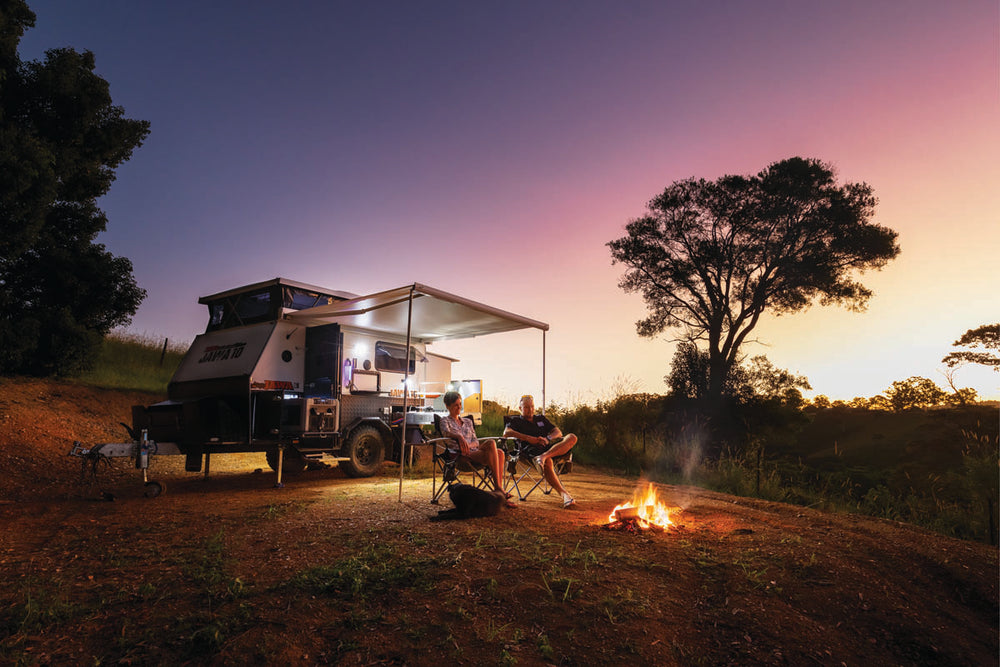

Heading off-grid with your caravan can feel daunting, so the ADU crew share the top tips they’ve picked up from years of full-time travel
Free camping, or off-grid camping, is one of the biggest drawcards of caravanning, but it’s also one of the most misunderstood. When we talk about free camping, we’re not just talking about places that don’t cost money. We’re talking about camping without being connected to power, water, or facilities. That could be a completely free riverside camp, or it could be a paid national park where you still need to be fully self-sufficient.
Over the years, we’ve met plenty of people who’ve been travelling for a long time but have never camped off-grid. Not because they can’t, but because of uncertainty around how it all works and taking that first step.
Everyone’s version of off-grid camping looks different, and there’s no right or wrong way to do it. When we first started travelling over 15 years ago, we were off-grid in a Hilux with a rooftop tent, no inverter, no built-in power system, no canopy, just a fridge in the tub and a very basic setup. It worked. You don’t need a big van or a high-end system to free camp, just enough power, water, and gear to support the way you want to travel.
For us, things have evolved. We’re now in our sixth year of living on the road full-time with no home base and our setup reflects that. Comfort matters, so our approach to off-grid camping is about making it sustainable over the long term.
Power – Set It Up for the Way You Travel
Power is where most people either get it right from the start or end up upgrading later. If you’re setting up a caravan for the first time, think about how you want to travel. If off-grid camping is a priority, your power system needs to reflect that, and it needs to make sense.
Our system is Victron/Arizon and was designed around our day-to-day living. Battery weight was a key consideration. We’ve added as much solar to the roof as possible, and we have an inverter large enough to power everything we need, including the washing machine, air fryer, and air conditioner, simultaneously.
We’ve been gasless for years. Our caravans are diesel-electric, so everything from cooking to hot water runs on our power system. That suits us, but it does mean our power needs are higher than those of someone running on gas. If you’ve got gas, you won’t need the same level of battery capacity or solar input. That’s why it’s important to match your setup to your lifestyle.
Things like inverter size matter too. If you want to run appliances like an air fryer, kettle or coffee machine, your system needs to handle them. Small design choices make a difference.
Roof space is valuable, so if off-grid living is important, it’s worth thinking about how much solar you can realistically fit, even if it means removing an extra roof hatch or two. Once you’re set up, it becomes about awareness. A few cloudy days mean pulling back a little; full sun means you can use more.
Water - Give Yourself More Options

We carry a decent amount onboard (over 700 litres), but we also give ourselves options. If your van doesn’t have the capacity you’d like, there are simple ways to extend it. Water bladders are one of the easiest. You can carry them easily, fill them when you have access, and transfer that water into your van when needed.
We have a setup where we can take the truck to a water source, fill the vehicle's tanks, and bring the water back to the van. That alone can extend your stay without packing up.
We have used the NCE 3kg front-loading washer-dryer in 4 of our caravans, and its low water usage allows us to comfortably keep on top of washing while off-grid.
This isn't about using less water to the point of discomfort; it’s about being smarter with how you use, store and move it. At the same time, always leave yourself a buffer.
When you’re living off-grid, smart storage and organisation aren’t just about neatness—they are essential for survival and comfort. Being miles away from the nearest facilities means every item needs a dedicated home, and nothing can be left to rattle around on rough tracks.
That’s where Navigator comes in. They offer a premium range of heavy-duty storage solutions designed specifically for the rugged demands of caravan life. From protective tow hitch covers that shield your gear from elements and grime, to internal smart storage organisers that maximise every square inch of your space, Navigator has you covered.
Explore the range to upgrade your setup before diving into our next off-grid tip!
Toilets – Choose What Suits Off-Grid Life
Toilets are a big part of off-grid camping and something worth thinking about properly. We’ve run a few different setups, and in our current van, we’re using the Tiny by Separett toilet again. We had it in our last van, loved it, and chose to put it straight into this one. It’s a urine-separating system, and for off-grid travel, it gives us a lot more flexibility. One of the biggest challenges with cassette toilets is finding dump points. In some areas, they’re easy to access, but in others, they’re not. A compost or urine separating style setup removes that limitation and allows you to stay out longer. There’s no one-size-fits-all, but it’s worth choosing something that suits your travel style.
Staying Connected
Staying connected on the road has changed completely over the years, and Starlink has been a big part of that for us. We started with a standard setup on the ground, then moved to a pole-mounted dish on the van and now run a fully wired system in the caravan along with a Starlink Mini mounted on the truck. That setup gives us reliable connectivity wherever we are, without the hassle of setting up each time we stop.
Staying off-grid doesn’t have to mean falling off the map. When you’re touring remote areas, reliable navigation and communication are your two absolute lifelines.
That is where the powerhouse partnership of Alpine and Hema Maps steps in with their latest rugged, all-in-one smart navigators: the Alpine HX-Z8 and the Alpine HX-Z6.
These aren't your typical highway GPS units. They are military-grade, dust-proof, and waterproof co-pilots designed specifically to keep you on track and in touch, even when cellular coverage is non-existent.
Planning – More Important Than It Used to Be
Planning is one of the biggest parts of off-grid travel. It starts with the basics like distances between stops, fuel availability, road conditions, weather, and making sure you’ve actually got what you need with you. Remember to pack essentials like a first-aid kit, medications, and enough supplies to get you through.
Conditions play a big role, too. Wind direction can completely change a campsite, especially along the coast; one side can be calm while the other is exposed. Rain can affect access, and what looks like an easy run on the map isn’t always that simple.
It’s also busier now than when we first hit the road, so booking ahead is part of planning too. If it’s a bookable free camp, it pays to know that in advance, and if it’s non-bookable, be aware that school holidays, long weekends and peak times can see these places fill quickly, so having a backup plan is never a bad idea. Planning doesn’t mean locking everything in, it just helps things run smoother.
Planning your off-grid stops is effortless with the latest releases from Camps Australia Wide. For dedicated budget and free-camping sites, grab the classic Camps 13 (the "Traveller’s Bible"), or opt for Caravan Parks 7 if you prefer easily comparing commercial parks and on-site amenities. If you want the absolute ultimate resource, the premium Camps Pendium 2 boxed set splits both books into seven handy, state-by-state guides paired with detailed Hema maps—allowing you to pack the whole country or just grab the single state book you need.
Safety – Keep It Simple & Covered
Safety doesn’t need to be complicated, but it does need to be considered. We use Survival First Aid kits and having them in both the truck & van just makes sense. If you’re grabbing one, you can use ADUCREW for a discount. Beyond that, it’s the basics: let someone know where you are if you’re heading somewhere quieter, pay attention to the weather, and think about where you’re setting up.
The Reality of Off-Grid Living
Free camping isn’t always perfect. There have been many times we’ve packed up and left spots that just weren’t working, and that’s part of it too. But the quiet, the space, and the ability to be completely self-sufficient are what keep us coming back.
If you’re new to off-grid camping, you don’t have to go all in straight away. Start somewhere you’ve got backup, like a caravan park without plugging in to power or connecting to water, or even your own driveway! Use your systems as if you were off-grid so you can learn how everything works without the pressure.
After that first go, it all starts to make sense, and from there it opens up a completely different way to travel.


Free camping 101: Top tips for off-grid living