



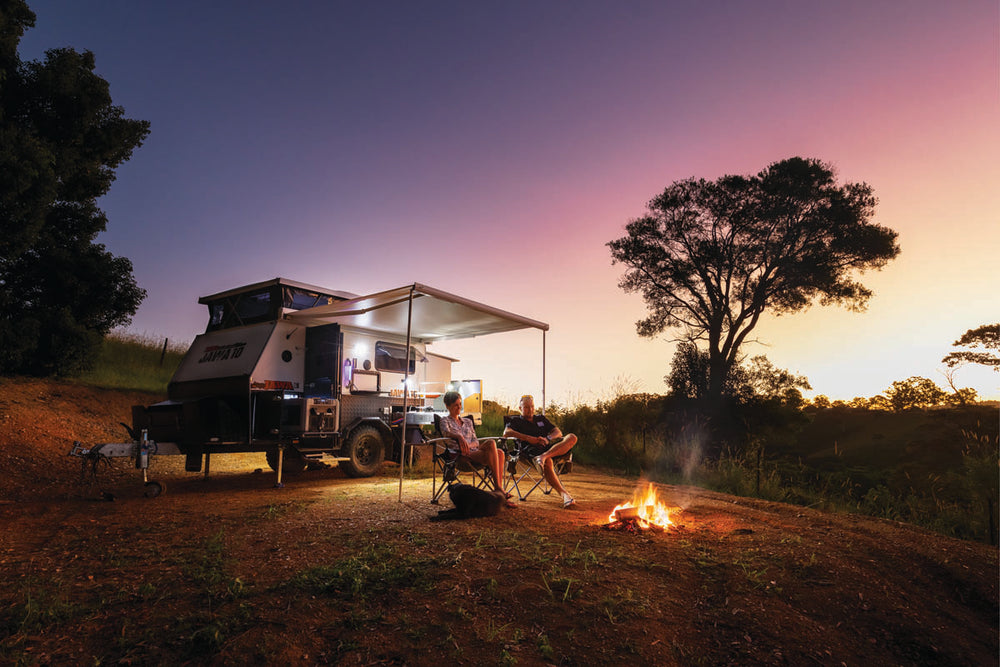

Family Caravan Trips
Family caravan travel is one of the best ways to see Australia. It gives you the freedom to take your time, explore places beyond the usual tourist trail and turn the journey itself into part of the holiday. But anyone who has spent several hours behind the wheel with children in the back seat will know that the reality can be a little more challenging.
Long stretches of highway, snack requests, boredom, arguments over toys and the inevitable “are we there yet?” can test even the most patient touring family.
The good news is that a little preparation can make a significant difference. From choosing the right departure time and packing road-trip entertainment to keeping the vehicle clean and planning regular breaks, these simple strategies can make family caravan travel considerably more enjoyable for everyone.
Choose your departure time carefully
There is no universally perfect time to start a family road trip. It depends on the ages and routines of your children, as well as how far you intend to travel on the first day.
If you have younger children who still nap during the day, an early departure that coincides with their usual sleep time could help you cover a decent distance before the back seat becomes restless. For older children, leaving after breakfast may be more practical and give everyone a chance to start the journey feeling refreshed.
Whatever time you choose, avoid beginning a long drive after a poor night's sleep. Tired children can be difficult enough, but a tired driver is a much more serious problem.
If you're travelling interstate, remember that your body clocks don't automatically adjust when you cross a border. Allow for time-zone changes when planning meal times, stops and overnight accommodation.
And before heading off, check that child seats are correctly fitted and that everything the kids might need during the first few hours is within easy reach.
Give the kids a role in the journey
One of the easiest ways to make family caravan travel more engaging is to make the children part of the adventure rather than simply passengers.
Before leaving home, show them the route and talk about some of the places you'll be visiting. Older children can help choose attractions, look up interesting stops or keep an eye out for landmarks along the way.
You could even give them a printed map and ask them to follow the route as you travel. For families heading off on a Big Lap, this can become an ongoing activity, with children marking each destination as they go.
It also gives everyone something to look forward to. Rather than thinking about the journey as a long stretch of road between home and the destination, children can start seeing it as a series of smaller adventures.
Checkout these great books to ensure the little ones feel part of the journey, while also keeping the adults from going insane!
Make the back seat an entertainment zone
Long-distance touring requires a different approach to entertainment than a quick trip to the shops. Packing a few carefully chosen activities can help prevent boredom without filling the vehicle with loose toys.
Activity books, colouring books, magnetic games, sticker books and age-appropriate travel games are all good options. Older children might prefer books, music, podcasts or audiobooks.
Just remember that reading or looking down for extended periods can contribute to motion sickness. Audiobooks and family-friendly podcasts can be a useful alternative, particularly on winding roads.
A practical storage solution can also make a difference. Rather than having toys scattered across the floor, give each child a small bag or storage container for their own entertainment.
For younger passengers, a Navigator Seat Buddy can help keep toys and other essentials organised and accessible from the back seat. It means children can have their favourite toys, books or activities close by without parents constantly reaching backwards while driving.
Most importantly, resist the temptation to turn around to retrieve something that has fallen. If an item is out of reach, it can wait until the next safe stop.
Don't underestimate snacks
Few things can derail a road trip faster than hungry children.
Packing snacks before you leave gives you more control over what the family eats and saves you from making an unplanned stop every time someone announces they're hungry. A vehicle fridge can be particularly useful on longer journeys, allowing you to carry chilled drinks, fruit, yoghurt and other fresh food.
Try to keep a mixture of healthy snacks and a few treats. A long drive is a holiday, after all, and the occasional lolly or ice cream can go a long way towards maintaining morale.
If you're travelling between states and territories, check current biosecurity requirements before packing fresh fruit, vegetables or other restricted foods. Rules can apply at certain borders and quarantine zones.

Protect everyone from the sun
Sun protection doesn't stop when you get inside the vehicle.
Long periods in the car can expose passengers to significant sunlight through the windows, while glare can make it difficult for younger children to sleep. Window shades can help reduce direct sunlight and make the back seat more comfortable.
Keep hats, sunglasses and sunscreen readily accessible rather than buried somewhere in the caravan. If you're travelling during summer, make sure everyone is drinking enough water, particularly when you're spending long periods in the vehicle.
And don't forget that the caravan itself can become extremely warm when parked. Allow time for it to cool down before everyone piles inside at the end of a long day.
Keep the car clean from the start
A little mess is inevitable when you're travelling with children, particularly when snacks, drinks, muddy shoes and sandy clothing are involved.
This is where good floor protection can save a lot of frustration. Muk Mats are designed to help protect vehicle carpets from dirt, mud, sand and spills, making them particularly useful for touring families who spend their holidays moving between beaches, bush camps and caravan parks.
The advantage isn't simply keeping the vehicle looking tidy. Easy-to-clean floor protection means less time spent trying to remove dirt from carpet when you arrive home.
For the rest of the vehicle, CGEAR products can also be useful around camp and on the road. The brand's sand-free technology is particularly suited to families who spend time at beaches and sandy campsites, helping reduce the amount of sand that gets transported from the campsite into the vehicle and caravan.
Keeping a dedicated rubbish bag in the vehicle is another simple trick. Encourage everyone to put wrappers, empty drink containers and other rubbish in one place rather than leaving it in door pockets and under seats.

Muk Mats
Make the caravan part of the adventure
One of the great advantages of family caravan travel is that the holiday doesn't finish when you arrive at the campsite.
Give children simple jobs around camp. Depending on their age, they might help set up chairs, organise outdoor games, collect kindling where permitted or help prepare dinner.
This can also reduce the pressure on parents to provide constant entertainment. A bucket, ball, frisbee or other outdoor game can provide hours of fun once you're settled.
National parks, bush camps and caravan parks can be particularly rewarding for children because they offer something that screens can't: space to explore. Before your trip, research what activities are available at your destinations and let the kids choose a few things they'd like to do.
Plan proper breaks
Trying to cover as many kilometres as possible without stopping isn't a great strategy for family caravan travel.
Children need opportunities to stretch their legs, use the bathroom, eat and burn off some energy. Drivers also benefit from regular breaks, particularly on long highway days.
When planning your route, look for rest areas or towns where you can stop somewhere with toilets, picnic facilities or a playground. Even 15 or 20 minutes outside the vehicle can make the next leg of the journey considerably easier.
Where practical, build your stops around interesting locations rather than treating them as interruptions. A roadside bakery, lookout, park or small country town can turn a necessary break into another part of the adventure.
Keep the itinerary flexible
It's tempting to plan every kilometre of a big touring holiday, but travelling with children rarely goes exactly to schedule.
Allow some breathing room between destinations. A longer lunch stop, an unexpected playground or a roadside attraction can easily add time to the day, but these moments can become some of the most memorable parts of the trip.
If you're towing a caravan, remember that your travel times will generally be longer than they would be in a car alone. Build this into your planning rather than trying to maintain an unrealistic schedule.
The goal isn't to arrive at the destination as quickly as possible. It's to arrive safely, with everyone still enjoying themselves.
One of the best ways to plan your stops, rest areas and sightseeing opportunities is with a quality map. Hema Maps offer detailed coverage of Australia’s highways, tracks, towns and points of interest, helping touring families plan practical routes and identify places worth stopping along the way. Whether you’re mapping out a weekend getaway or tackling a longer adventure, having a reliable map on hand makes it easier to plan ahead and keep the journey running smoothly.
Accept that there will be difficult moments
Even with the best preparation, there will be arguments, boredom, spilled drinks and repeated questions about how much longer the journey will take.
That's simply part of travelling with children.
The trick is to prepare for those moments rather than expecting a perfectly peaceful drive. Keep entertainment accessible, snacks organised, the vehicle protected and regular breaks built into the itinerary.
Most importantly, don't let a difficult hour overshadow the bigger experience.
For families, family caravan travel is about much more than getting from one destination to another. It's about giving children the opportunity to see new parts of Australia, experience different landscapes and spend uninterrupted time together.
With a little preparation, the kilometres between home and the next campsite can become part of the adventure rather than something to endure.
So pack the snacks, organise the toys, protect the floors, plan your stops and leave a little room for spontaneity. The journey might not always be quiet, clean or perfectly on schedule — but years from now, those messy, noisy road trips could be the ones everyone remembers most.


Family Caravan Travel: Keep Kids Happy on the Road